우리가 자주 접하는 음식들 중에는 지방(Fat)이 풍부한 것도 있고, 적은 것도 있습니다.
예를 들어 들기름이나 올리브오일처럼 거의 100%가 지방인 순수 오일류,
버터, 고지방 치즈, 견과류, 씨앗류처럼 절반 이상이 지방인 식품,
붉은살 생선, 삼겹살, 아보카도처럼 지방 함량이 중간 정도인 음식,
그리고 흰살 생선이나 닭가슴살처럼 지방 함량이 낮은 부위도 있습니다.
하지만 여전히 많은 사람들은 “지방 = 살찌는 원인”이라 오해하거나,
탄수화물은 괜찮고 지방은 해롭다고 단정짓곤 합니다.
그러나 생화학과 대사의 관점에서 보면,
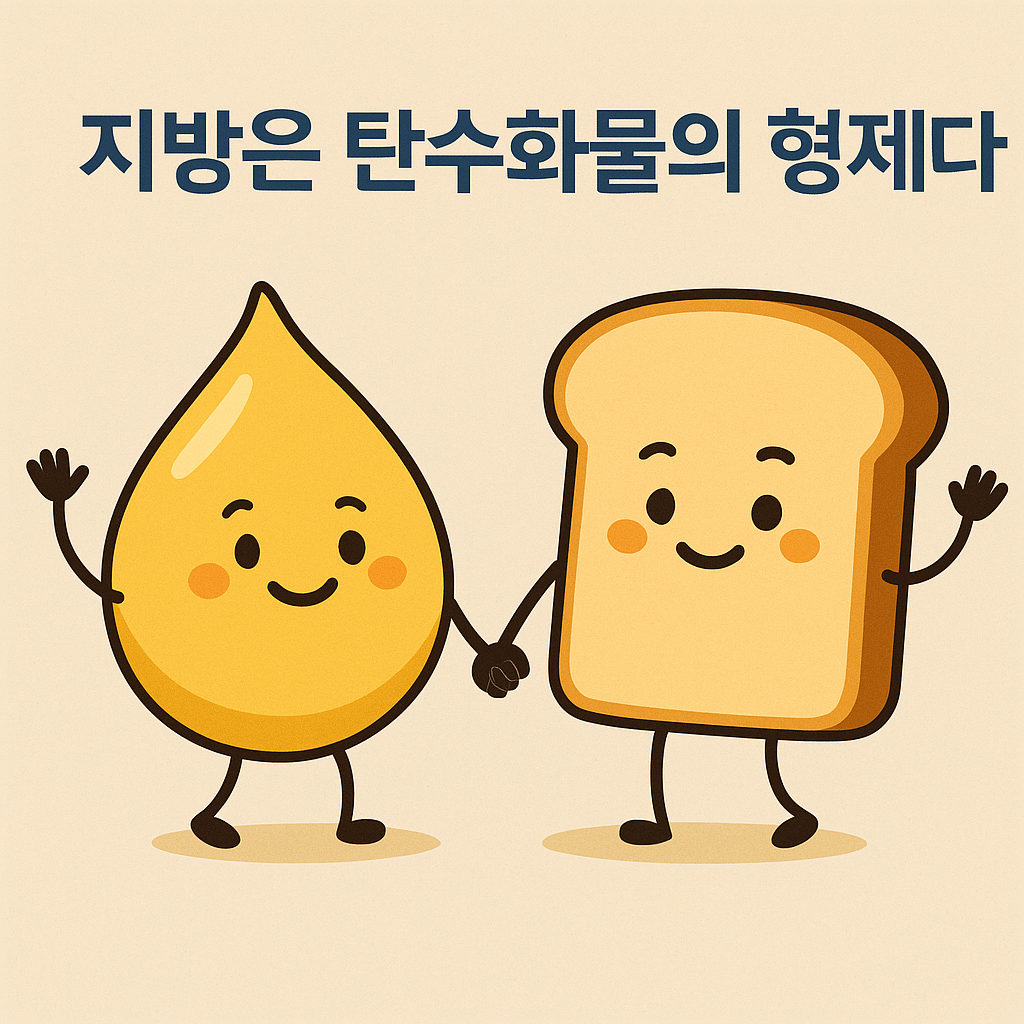
지방(Fat)은 단순한 연료 그 이상이며, 탄수화물과 함께 같은 에너지 회로를 공유하는 — 비유하자면 ‘쌍둥이 형제’ 같은 존재입니다.
지방과 탄수화물은 서로 다른 길을 가지만, 결국 같은 종착지에 도달한다
탄수화물은 분해되어 포도당으로,
지방(Fat)은 소장에서 지방산(fatty acid)과 글리세롤로 분해되어 흡수됩니다.
하지만 둘 다 세포 속 미토콘드리아에서 ATP(에너지)를 생성하는
TCA 회로(시트르산 회로)에 진입합니다.
지방산은 β-산화(beta-oxidation) 과정을 통해
공통 분자인 아세틸-CoA(탄소 2개)로 변환되고,
탄수화물에서 유래한 포도당 역시 해당과정을 거쳐 결국 아세틸-CoA로 이어집니다.
이처럼 지방과 탄수화물은 다른 길을 따라 같은 목적지에 도달하는 구조입니다.
지방은 저장을 위해 최적화된 에너지원이다
탄수화물은 글리코겐 형태로 간과 근육에 소량 저장되지만,
지방(Fat)은 체내에 압축된 형태로 고농축 저장이 가능합니다.
1g당 9kcal에 달하는 에너지를 담을 수 있어
인체는 긴 단식이나 기아 상태에서 지방을 우선 연소시켜 생명을 유지합니다.
우리가 아무것도 먹지 않아도 며칠을 버틸 수 있는 이유,
그 핵심에는 지방 대사 시스템이 있습니다.
지방을 먹으면 정말 살이 찔까?
지방 섭취 자체가 비만의 원인은 아닙니다.
실제로 과도한 탄수화물이 인슐린을 자극해
지방 합성(de novo lipogenesis)을 유도하고,
체내에 지방이 축적됩니다.
반면, 지방(Fat)은 인슐린 분비를 거의 유도하지 않으며,
탄수화물 없이 섭취될 경우 케톤체를 생성하고
저장 지방까지 동원하여 지속적인 연소 체계를 활성화시킵니다.
이는 저탄고지(LCHF), 케토제닉 식단의 과학적 근거입니다.
지방은 단순한 연료를 넘어 생명 구조의 재료다
지방(Fat)은 에너지원이자 생명의 뼈대입니다.
우리 몸의 세포막은 인지질(Phospholipid) 이중층으로 구성되며,
이는 지질(Lipid)이라는 상위 개념 안에 포함됩니다.
콜레스테롤, 스테로이드 호르몬, 뇌 조직, 신경전달물질 등
모두 지질을 기본 재료로 만들어집니다.
특히 오메가-3와 오메가-6 지방산은
염증 조절, 면역 반응, 뇌 기능, 호르몬 균형에 핵심적인 역할을 하며,
이 비율이 무너질 경우 만성 염증, 우울증, 인지 장애, 대사질환이 유발될 수 있습니다.
따라서 건강에 도움이 되는 지방을 선택하고,
산화된 식물성 기름이나 트랜스지방 등 건강에 해가 되는 지방을 피하는 것은
예방의학적 식생활의 핵심입니다.
지방은 언제, 어떻게, 무엇과 함께 먹느냐가 중요하다
지방 자체는 문제가 되지 않습니다.
문제는 설탕, 밀가루, 정제된 시럽, 과당 음료와 함께 섭취할 때입니다.
이 조합은 인슐린 반응을 극대화하고,
지방을 에너지로 쓰지 못한 채 바로 축적하게 만듭니다.
반대로, 잎채소와 함께 먹는 건강에 도움이 되는 지방(Fat),
예를 들어 올리브오일(Olive oil), 아보카도, 견과류, 생선기름 등은
지용성 비타민(A, D, E, K)의 흡수를 돕고
포만감과 항염 작용까지 지원합니다.
결론 – 지방은 탄수화물의 쌍둥이 형제다
탄수화물은 성냥불, 지방은 장작불입니다.
금세 타오르고 금세 꺼지는 탄수화물과,
오래도록 열을 유지하며 에너지를 지속적으로 공급하는 지방.
둘은 서로 다른 속도를 가졌지만,
결국 ATP라는 동일한 에너지 화폐로 변환되며 생명을 움직이는 원동력이 됩니다.
지방은 정말로 나쁜 것일까요?
아니면 오히려, 세포를 만들고, 뇌를 구성하고, 생명을 유지하는 섬세한 동반자일까요?
당신이 지금 먹고 있는 것은
단순한 칼로리입니까,
아니면 생명을 짓는 재료입니까?
참고 문헌 (5편)
- Berg JM, Tymoczko JL, Stryer L
Biochemistry, 8th Edition
W.H. Freeman and Company, 2015
▶ 생화학의 고전적 교과서. 지방산의 β-산화, TCA 회로, 인지질 구조와 역할 등을 종합적으로 설명. - Volek JS, Phinney SD
The Art and Science of Low Carbohydrate Living
Beyond Obesity LLC, 2011
▶ 케톤체 대사, 지방 연소 활성화, 인슐린 저항과 식이지방에 대한 최신 연구 요약. - Simopoulos AP
The importance of the omega-6/omega-3 fatty acid ratio in cardiovascular disease and inflammatory disorders
Experimental Biology and Medicine, 2008
▶ 오메가 지방산 비율의 불균형이 만성질환에 미치는 영향을 과학적으로 규명한 논문. - Mozaffarian D, Micha R, Wallace S
Effects on coronary heart disease of increasing polyunsaturated fat in place of saturated fat
PLoS Medicine, 2010
▶ 포화지방 vs 불포화지방의 대사적 차이와 심혈관 질환 예방 관련 연구. - Fernandez ML, West KL
Mechanisms by which dietary fatty acids modulate plasma lipids
Journal of Nutritional Biochemistry, 2005
▶ 다양한 식이 지방이 콜레스테롤과 혈중 지질 프로필에 미치는 영향 분석.
English Version
Title: Fat Is Carbohydrate’s Twin Brother – A Different Path, the Same Destination
Among the foods we commonly eat, some are high in fat while others contain very little.
For example, pure oils like perilla oil and olive oil are nearly 100% fat.
Butter, high-fat cheeses, nuts, and seeds contain more than 50% fat.
Oily fish, pork belly, and avocados fall into the moderate range (10–40%),
while white fish and lean meats like chicken breast have fat contents under 10%.
Still, many people mistakenly believe that “fat = weight gain” or that fat is bad while carbohydrates are good.
But from a biochemical and metabolic standpoint,
fat is far more than just fuel — it is, in many ways, the twin sibling of carbohydrates, sharing the same energy pathway.
Different Routes, Same Destination
Carbohydrates are broken down into glucose.
Fat is digested in the small intestine into fatty acids and glycerol.
Both are ultimately used in the mitochondria to produce energy (ATP) through the TCA cycle (Citric Acid Cycle).
Fatty acids undergo beta-oxidation and are converted into acetyl-CoA,
while glucose from carbohydrates is also metabolized into acetyl-CoA via glycolysis and pyruvate conversion.
In the end, fat and carbohydrate take different routes but converge at the same metabolic crossroads.
Fat: The Optimal Energy Storage
Carbohydrates are stored as glycogen in the liver and muscles, but in limited amounts.
In contrast, fat is stored in high-density, compact form throughout the body.
At 9 kcal per gram, fat offers the most efficient energy storage system.
During fasting or emergency states, the body naturally shifts to burning fat to sustain life.
Our ability to survive for days without eating relies on this fat metabolism system.
Does Eating Fat Make You Fat?
Not exactly.
The real problem lies in excess carbohydrate intake, which triggers insulin secretion and promotes de novo lipogenesis — the creation of fat from glucose.
Fat intake alone does not spike insulin.
In fact, when consumed without carbohydrates, fat promotes ketone production and activates fat-burning pathways,
even using stored body fat as fuel.
This is the principle behind low-carb, high-fat (LCHF) and ketogenic diets.
Fat Is More Than Fuel — It Builds the Body
Fat (more precisely, lipids) is not just energy — it is structure.
Cell membranes are composed of phospholipid bilayers,
and other essential molecules like cholesterol, steroid hormones, and neurotransmitters are also made from lipids.
Especially important are omega-3 and omega-6 fatty acids,
which influence inflammation, immune balance, brain function, and hormonal regulation.
An imbalance between the two can increase the risk of chronic inflammation, depression, cognitive decline, and metabolic disorders.
That’s why it’s important to choose fats that support health and avoid fats that harm it,
such as oxidized oils and trans fats.
When and With What You Eat Fat Matters
Fat isn’t harmful by itself.
The problem arises when it’s consumed with sugar, refined flour, syrup, or fructose-laden beverages.
This combination spikes insulin and causes fat to be stored rather than burned.
By contrast, fat consumed with leafy vegetables —
like olive oil, avocados, nuts, and fish oil —
improves the absorption of fat-soluble vitamins (A, D, E, and K) and promotes satiety and anti-inflammatory effects.
Conclusion – Fat and Carbohydrates: Twin Paths
Carbohydrates are like matchsticks. Fat is like firewood.
Carbs ignite quickly but burn out fast.
Fat burns slowly, offering sustained energy and metabolic flexibility.
Both eventually become ATP, the universal energy currency of the cell.
Is fat really the enemy?
Or is it a critical builder of cells, the brain, and life itself?
What are you feeding your body now?
Just calories — or the very molecules that sustain life?
References (for English version)
- Berg JM, Tymoczko JL, Stryer L
Biochemistry, 8th Edition
W.H. Freeman and Company, 2015
▶ A classic textbook covering the beta-oxidation of fatty acids, the TCA cycle, and the structural role of lipids in membranes and signaling. - Volek JS, Phinney SD
The Art and Science of Low Carbohydrate Living
Beyond Obesity LLC, 2011
▶ Discusses ketone metabolism, insulin resistance, and how fat-burning is enhanced by low-carb intake. - Simopoulos AP
The importance of the omega-6/omega-3 fatty acid ratio in cardiovascular disease and inflammatory disorders
Experimental Biology and Medicine, 2008
▶ Analyzes the impact of omega fatty acid imbalance on chronic inflammation and modern disease. - Mozaffarian D, Micha R, Wallace S
Effects on coronary heart disease of increasing polyunsaturated fat in place of saturated fat
PLOS Medicine, 2010
▶ Evaluates the role of different fats in heart disease prevention. - Fernandez ML, West KL
Mechanisms by which dietary fatty acids modulate plasma lipids
Journal of Nutritional Biochemistry, 2005
▶ Explores how different types of dietary fats influence cholesterol and lipid profiles.
日本語バージョン
タイトル:脂肪は炭水化物の双子の兄弟 ― 異なる道、同じ目的地
私たちが日常的に食べる食品の中には、脂肪(Fat)を多く含むものもあれば、ほとんど含まないものもあります。
たとえば、えごま油やオリーブオイルのようにほぼ100%が脂肪である純粋なオイル類、
バター、高脂肪チーズ、ナッツ、種子類は脂肪が50%以上。
サーモンや豚バラ、アボカドなどは中程度の脂肪を含み、
白身魚や鶏むね肉などは10%未満の低脂肪食品に分類されます。
それでも多くの人々は「脂肪=太る原因」と思い込み、
炭水化物は良いもので、脂肪は悪いものと一方的に決めつけてしまいがちです。
しかし、生化学や代謝の視点から見ると、
脂肪(Fat)は単なるエネルギー源以上のものであり、炭水化物と同じ代謝経路を共有する ― まさに“双子の兄弟”のような存在です。
異なる経路、同じ代謝地点
炭水化物は分解されてブドウ糖になります。
脂肪は小腸で脂肪酸(fatty acid)とグリセロールに分解されます。
この両者は最終的にミトコンドリアにおいて、
TCAサイクル(クエン酸回路)を通してATP(エネルギー)を生成します。
脂肪酸はβ酸化によってアセチルCoAに変換され、
ブドウ糖も解糖系とピルビン酸変換を経てアセチルCoAに至ります。
つまり、脂肪と炭水化物は異なる経路をたどりながらも、最終的に同じ代謝の交差点に合流するのです。
脂肪は最適なエネルギー貯蔵形態
炭水化物はグリコーゲンとして肝臓や筋肉に少量貯蔵されますが、
脂肪は体内に高密度でコンパクトに大量貯蔵できます。
1gあたり9kcalという高いエネルギー効率を持つため、
断食や飢餓状態では、体は脂肪を優先的に燃焼させて生命活動を維持します。
食べ物がなくても数日生き延びられるのは、脂肪代謝のおかげです。
脂肪を食べると太る?
そう単純ではありません。
実際には過剰な炭水化物がインスリンを刺激し、
脂肪合成(de novo lipogenesis)を促進して脂肪が蓄積されます。
一方、脂肪単体ではインスリン分泌はほとんど起きません。
炭水化物を摂らずに脂肪を摂取すると、ケトン体が生成され、
脂肪燃焼回路が活性化し、体内の脂肪も使われ始めます。
これはLCHF(低炭水化物・高脂肪)やケトジェニック食の原理です。
脂肪はエネルギーだけでなく、生命の構成材料
脂肪(Fat)は単なるエネルギーではありません。
細胞膜はリン脂質(phospholipid)二重層で構成されており、
コレステロール、ステロイドホルモン、脳構造、神経伝達物質などもすべて**脂質(Lipid)**から作られています。
とくにオメガ3脂肪酸とオメガ6脂肪酸は、
炎症制御、免疫調整、脳機能、ホルモンバランスにおいて極めて重要です。
この比率が崩れると、慢性炎症、うつ、認知障害、代謝異常のリスクが高まります。
したがって、健康に役立つ脂肪を選び、
酸化油やトランス脂肪など健康を害する脂肪を避けることが重要です。
いつ、どう、何と一緒に脂肪を摂るかが重要
脂肪自体が悪いのではありません。
問題なのは、砂糖、小麦粉、果糖飲料などと一緒に脂肪を摂取する場合です。
この組み合わせはインスリン分泌を促進し、脂肪がエネルギーとして使われずそのまま蓄積されます。
反対に、**葉野菜と一緒に摂る脂肪(オリーブオイル、アボカド、ナッツ、魚油など)**は、
脂溶性ビタミンの吸収を助け、満腹感や抗炎症効果ももたらします。
結論 ― 脂肪と炭水化物は双子のような存在
炭水化物はマッチの火、脂肪は薪の火です。
炭水化物はすぐに燃えてすぐに消えます。
脂肪はゆっくり燃えて、長く持続的にエネルギーを供給します。
どちらも最終的にはATPという細胞のエネルギー通貨に変換されます。
脂肪は本当に悪者でしょうか?
それとも、細胞を作り、脳を構成し、生命を支える大切な同伴者でしょうか?
あなたが今食べているものは、
ただのカロリーですか?
それとも、命を構成する素材でしょうか?
参考文献(日本語バージョン用)
- Berg JM、Tymoczko JL、Stryer L
『Biochemistry(生化学 第8版)』
W.H. Freeman and Company、2015年
▶ 脂肪酸のβ酸化、TCA回路、脂質の構造的役割など、脂肪代謝に関する基本を網羅した教科書。 - Volek JS、Phinney SD
『The Art and Science of Low Carbohydrate Living』
Beyond Obesity LLC、2011年
▶ ケトン体の代謝、インスリン抵抗性、脂肪燃焼の促進など、低炭水化物食の科学的根拠を解説。 - Simopoulos AP
「心血管疾患と炎症性疾患におけるオメガ6/オメガ3脂肪酸比の重要性」
『Experimental Biology and Medicine』、2008年
▶ 脂肪酸のバランス崩壊が慢性疾患に与える影響を詳細に分析。 - Mozaffarian D、Micha R、Wallace S
「飽和脂肪酸の代わりに多価不飽和脂肪酸を摂取した際の冠動脈疾患への影響」
『PLOS Medicine』、2010年
▶ 様々な脂肪の摂取が心疾患リスクに与える効果を比較研究。 - Fernandez ML、West KL
「食事性脂肪酸が血中脂質に与える調節メカニズム」
『Journal of Nutritional Biochemistry』、2005年
▶ 食事に含まれる脂肪の種類が、コレステロールや脂質プロファイルにどう影響するかを示す研究。
Leave a Reply