그러나 한국은 아직 ‘탄단지’라는 주문을 외우고 있다
여러분. 오늘 이야기의 핵심은 단순합니다.
미국은 식단 피라미드를 바꾸었지만, 대한민국은 식단 언어조차 바꾸지 않았습니다. 그리고 이 차이가 앞으로의 건강 격차를 결정할 것입니다.
1. 미국은 식단 피라미드를 뒤집었습니다.
하지만 , 이 피라미드는 ‘미국의 변화’입니다 — 한국의 것이 아닙니다
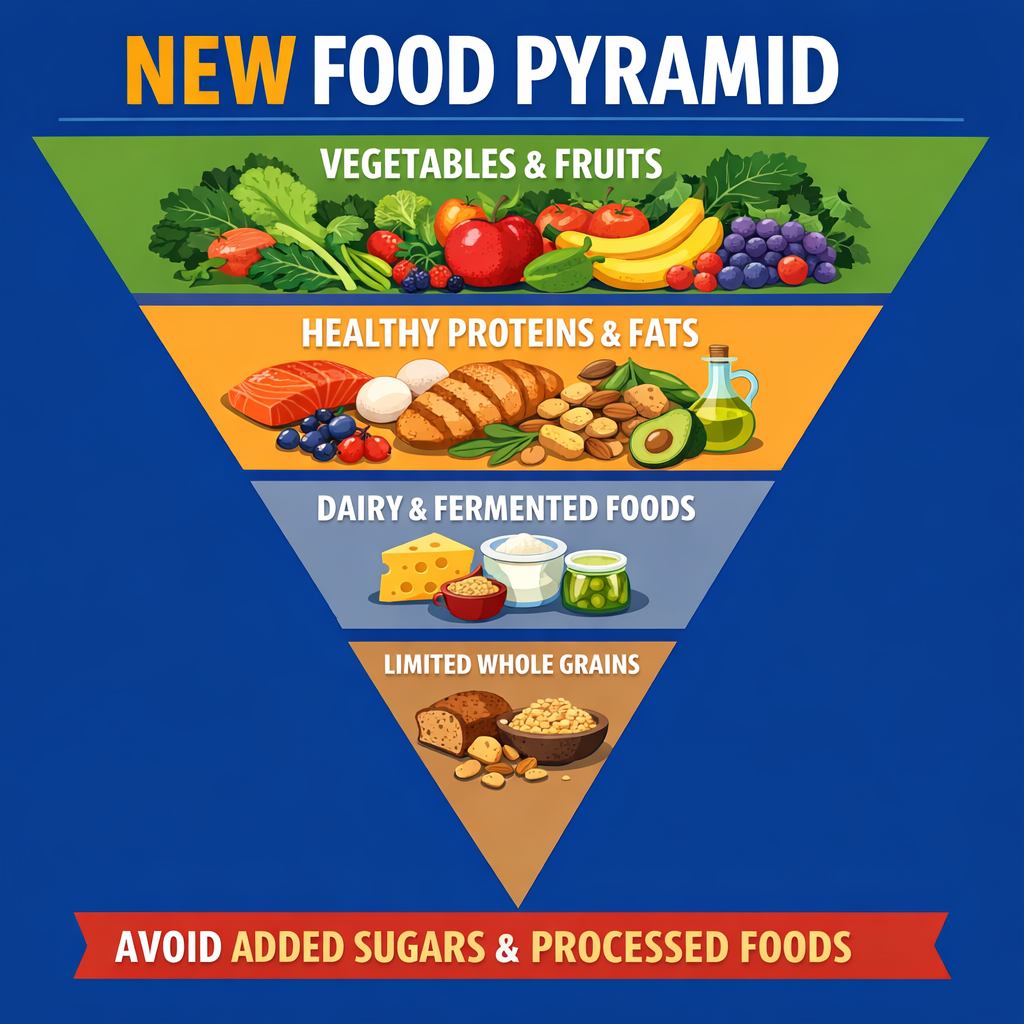
2026년 1월, 미국 보건복지부와 농무부는 기존의 식단 피라미드와 전혀 다른 시각 자료를 공식적으로 제시했습니다.
곡물과 빵이 바닥을 이루던 구조는 사라졌고, 채소, 과일, 단백질 식품, 건강한 지방, 그리고 통곡이 완전히 다른 위계로 재배치되었습니다.
그러나 여기서 가장 먼저 바로잡아야 할 오해가 있습니다.
이 변화는 미국의 것입니다.
한국이 바꾼 것도 아니고, 한국이 받아들였다고 말할 근거도 없습니다.
대한당뇨병학회가 미국당뇨병학회의 식단 가이드라인을 그대로 따르지 않는 현실을 보면,
이번 피라미드 역시 한국에서 공식적으로 채택될 가능성은 높지 않습니다.
2. 미국은 ‘탄수화물’이란 말은 사용하지않습니다.
한국 언론과 전문가들이 이번 피라미드를 설명하며 가장 많이 한 말은 이것입니다.
“탄수화물 비중이 줄었다.”
이 문장은 한국식 오독입니다.
미국은 오래전부터 carbohydrate를 하나의 덩어리로 다루지 않았습니다.
미국의 분류는 명확합니다.
- 소화되는 탄소 (digestible carbohydrate)
→ 당질, 혈당과 인슐린 신호에 직접 연결되는 탄소 - 소화되지 않는 탄소 (non-digestible carbohydrate)
→ 식이섬유, 장내 미생물과 대사 조절 신호에 연결되는 탄소
미국은 처음부터
“얼마나 먹느냐”보다
“어떤 탄소가, 어떤 경로로 처리되느냐”를 봐왔습니다.
3. ‘탄수화물’이라는 단어는 일본을 거쳐 한국에서 굳어졌습니다
아이러니하게도
‘탄수화물’이라는 총칭을 의학적 진리처럼 고정시킨 나라는
미국이 아니라 일본을 거친 대한민국입니다.
일본 역시 과거에는 유럽식 영향으로 carbohydrate를 묶어 설명했지만,
이미 오래전에 이를 수정했습니다.
현재 일본의 공식 영양·의학 언어는
*당질(糖質)**과 *식이섬유(食物繊維)**입니다.
그러나 대한민국만은 이 오류를 고치지 않았습니다.
의사, 영양사, 학회, 방송이 모두 함께
‘탄단지’라는 비과학적 구호를 합창합니다.
이것은 단순한 용어 문제가 아닙니다.
사고 체계의 문제입니다.
4. 삼대영양소는 세계 표준이 아닙니다
여기서 또, 짚고 넘어가야 합니다.
‘삼대영양소’는 세계 표준이 아닙니다.
그것은 교육 편의어였고, 식품 산업과 궁합이 맞았을 뿐입니다.
세계 표준 영양학의 중심은 언제나
*필수영양소 (Essential Nutrients)입니다.
- 필수 아미노산
- 필수 지방산
- 비타민과 미네랄
- 그리고 물
단백질은 ‘영양소’가 아니라
필수 아미노산을 전달하는 매개체이고,
지방 역시 종류와 개인의 대사 반응이 핵심입니다.
이 기본 개념을 무시한 채
‘탄단지 비율’을 외우게 하는 교육은
정밀의학과 완전히 어긋납니다.
5. 왜 같은 빵이 어떤 사람을 살리고, 어떤 사람은 무너트릴까요?
여기서 많은 환자들이 좌절합니다.
“나는 왜 같은 빵을 먹었는데 이렇게 망가졌을까?”
정밀의학의 답은 명확합니다.
- 미네랄이 함유된 밀
- 자연발효종과 소금
- 손 반죽
- 12시간 이상 숙성된 발효식품 빵
을 먹었느냐,
아니면
- 공장형
- 양산형
- 인더스트리얼 브레드
를 먹었느냐의 차이입니다.
여기에 더해
인슐린 감수성,
간의 당질 처리 능력,
장내 미생물 구성,
수면, 스트레스, 약물
이 모든 요소의 차이가
전혀 다른 결과를 만듭니다.
6. 첨가당과 가공정제식품이 식탁에 오르는 순간, 피라미드는 무너집니다.
이 지점이 오늘 글의 핵심입니다.
아무리 피라미드를 거꾸로 세워도,
식탁에 다음이 올라오는 순간
그 피라미드는 의미를 잃습니다.
- 설탕
- 액상과당
- 당 첨가 음료
- 라면 스프
- 코인 조미료
- 양산형 소스와 파우더
- 공장빵, 인더스트리얼 ‘거짓빵’
이들은
당질, 저급 지방, 저급 단백질을
수용체–리간드 시스템에 맞게 결합시켜
끊기 어렵게 설계됩니다.
이것은 의지의 문제가 아니라
노출 환경의 문제입니다.
그래서 미국의 새 가이드라인이
가장 분명하게 지목한 것이
첨가당과 고도로 가공된 식품입니다.
7. CGM과 유전체는 ‘그림’을 ‘현실’로 바꾸는 도구로 활용될 수 있습니다.
마지막으로, 현실적인 이야기를 해야 합니다.
피라미드는 그림입니다.
그러나 CGM과 유전체 분석은
내 몸의 법정입니다.
CGM은
“이 음식이 나에게 맞는지”를
즉시 보여줍니다.
유전체는
운명이 아니라
취약 지점의 지도를 제공합니다.
하지만 단서가 있습니다.
첨가당과 초가공 노출을 줄이지 않으면
어떤 데이터도 삶을 바꾸지 못합니다.
결론: 미국은 방향을 바꿨습니다. 한국은 비과학적이고 불완전한 언어에 묶여 있는 상황에서, 과연 어떤 선택을 할까요?
이번 미국의 피라미드는
완성된 해답이 아닙니다.
그러나 분명한 방향 선언입니다.
“비율을 외우지 말고,
노출 환경을 바꿔라.”
문제는 한국입니다.
대한민국의 전문가들은 아직도
‘탄단지’라는 주문을 외우며
전단계 당뇨병 환자와
설폰계·인슐린 비의존 환자들을
관해에서 멀어지게 만드는 듯한
기묘한 합창을 이어가고 있습니다.
그리고 이 미국의 피라미드는
그 합창 속에서
한동안 외면당할 가능성이 매우 높습니다.
참고문헌 5편
- Steele EM, et al. (2016)
Title: Ultra-processed foods and added sugars in the US diet: Evidence from a nationally representative cross-sectional study
Journal: BMJ Open
Summary: 초가공식품이 미국 식단에서 차지하는 비중과, 이들 식품이 첨가당 섭취의 주요 공급원임을 분석한 연구입니다. 연구 결과 초가공식품의 섭취 비율이 높을수록 전체 열량 중 첨가당 비중이 높아진다는 점을 확인했습니다. PubMed Central - de Miranda RC, et al. (2021)
Title: Impact of ultra-processed food consumption on metabolic health: Evidence from epidemiological studies
Journal: Public Health Nutrition
Summary: 다양한 연구를 종합해 초가공식품 섭취가 비만, 당뇨병 표지자, 인슐린 저항성과 같은 대사 건강 지표와 부정적 연관성이 있음을 보여줍니다. PubMed - Lee G, et al. (2024)
Title: Association Between Ultraprocessed Food Consumption and Metabolic Disorders in Children and Adolescents
Journal: Nutrients
Summary: NOVA 분류 체계를 이용해 초가공식품 섭취와 소아 청소년 비만 및 대사 장애 위험 간의 연관성을 조사한 연구입니다. 초가공식품 섭취가 대사질환 위험과 관련된 결과를 보여줍니다. MDPI - Vitale M. (2023)
Title: Ultra-Processed Foods and Human Health: A Systematic Review
Journal: PMC (PubMed Central)
Summary: 초가공식품 섭취가 당뇨병, 고혈압, 이상지질혈증, 비만 등의 건강 문제와 연관되어 있다는 증거를 종합적으로 분석한 체계적 리뷰 논문입니다. PubMed Central - DGAC (2024) Scientific Report
Title: Scientific Report of the 2025 Dietary Guidelines Advisory Committee
Authors/Source: U.S. Department of Health and Human Services & U.S. Department of Agriculture (NESR systematic reviews)
Summary: 2025–2030 미국 식단 가이드라인 자문 보고서로, 초가공식품 패턴과 성장·체지방·비만 위험 간의 관계를 체계 문헌 검토로 다룹니다. 이 보고서는 새 가이드라인 권고 사항의 기초가 되는 과학적 근거를 제공합니다.
1. The United States Has Inverted the Dietary Pyramid
But This Pyramid Is a Change in the United States — Not Korea’s
In January 2026, the U.S. Department of Health and Human Services and the U.S. Department of Agriculture officially presented a visual dietary model that was fundamentally different from the previous food pyramid.
The structure that placed grains and bread at the base disappeared. Vegetables, fruits, protein foods, healthy fats, and whole grains were rearranged into an entirely new hierarchy.
However, the first misunderstanding that must be corrected is this:
This change belongs to the United States.
It is not a change made by Korea, nor is there any evidence that Korea has adopted it.
Considering the reality that the Korean Diabetes Association does not fully follow the dietary guidelines of the American Diabetes Association, it is highly unlikely that this pyramid will be officially adopted in Korea.
2. The United States Does Not Use the Term “Carbohydrates” as Korea Does
The most common explanation offered by Korean media and experts regarding this pyramid is:
“The proportion of carbohydrates has decreased.”
This statement is a Korean misinterpretation.
The United States has not treated carbohydrates as a single, undifferentiated category for a long time.
The American classification is clear:
- Digestible carbohydrates
→ Sugars and starches directly linked to blood glucose and insulin signaling - Non-digestible carbohydrates
→ Dietary fiber connected to gut microbiota and metabolic regulation
From the beginning, the United States has focused not on “how much is eaten,” but on which type of carbon is processed, and through which biological pathway.
3. The Term “Carbohydrates” Became Fixed in Korea via Japan
Ironically, the country that cemented “carbohydrates” as if it were a medical truth was not the United States, but Korea—via Japan.
Japan, too, once grouped carbohydrates under European influence. However, this framework was revised long ago.
Today, Japan’s official nutritional and medical terminology clearly distinguishes between:
- Digestible carbohydrates (糖質)
- Dietary fiber (食物繊維)
Only Korea has failed to correct this error.
Doctors, dietitians, academic societies, and broadcasters all chant together the unscientific slogan of “carbohydrates–protein–fat.”
This is not merely a problem of terminology.
It is a problem of the entire way of thinking.
4. The “Three Macronutrients” Are Not a Global Standard
This point must also be addressed clearly.
The concept of the “three macronutrients” is not a global standard.
It was a pedagogical convenience that happened to align well with the food industry.
The center of global nutrition science has always been Essential Nutrients:
- Essential amino acids
- Essential fatty acids
- Vitamins and minerals
- And water
Protein is not itself an essential nutrient; it is merely a vehicle for delivering essential amino acids.
Likewise, fat is defined not by quantity but by type and individual metabolic response.
An education system that forces people to memorize “macronutrient ratios” while ignoring these fundamentals is fundamentally incompatible with precision medicine.
5. Why the Same Bread Saves Some People and Destroys Others
This is where many patients become frustrated.
“Why did the same bread ruin my health?”
The answer from precision medicine is clear.
Did you eat bread made from mineral-rich wheat, naturally fermented starter, salt, hand-kneaded, and fermented for more than 12 hours?
Or did you eat:
- Factory-produced bread
- Mass-produced bread
- Industrial bread
On top of that, differences in:
- Insulin sensitivity
- Hepatic carbohydrate processing
- Gut microbiome composition
- Sleep, stress, and medications
produce completely different outcomes.
The problem lies not only in what is eaten, but how it is made and how each body responds.
Ultra-processed, mass-produced breads tend to provoke high glycemic responses and are easily combined with added sugars and flavor enhancers.
6. The Moment Added Sugars and Ultra-Processed Foods Appear on the Table, the Pyramid Collapses
This is the core of today’s discussion.
No matter how perfectly the pyramid is inverted, it loses all meaning the moment the following appear on the table:
- Sugar
- High-fructose corn syrup
- Sugar-sweetened beverages
- Instant noodle seasoning packets
- Powdered flavor enhancers
- Mass-produced sauces and powders
- Factory bread and industrial “fake bread”
These products are engineered to combine sugars, low-quality fats, and low-quality proteins in ways that exploit receptor–ligand systems, making them difficult to stop consuming.
This is not a failure of willpower.
It is a problem of environmental exposure.
That is why the new U.S. dietary guidelines most clearly target added sugars and ultra-processed foods.
7. CGM and Genomics Can Turn a “Diagram” into Reality
Finally, we must be practical.
A pyramid is only a diagram.
But continuous glucose monitoring (CGM) and genomic analysis serve as a personal court of law for the body.
CGM immediately shows whether a food is compatible with one’s metabolism.
Genomics does not determine destiny, but it provides a map of vulnerability.
However, there is a condition:
If exposure to added sugars and ultra-processed foods is not reduced, no amount of data will change a life.
Conclusion: The United States Has Changed Direction — Korea Remains Bound by Unscientific Language
The new U.S. pyramid is not a complete solution.
But it is a clear declaration of direction:
“Stop memorizing ratios.
Change the exposure environment.”
The problem is Korea.
Korean experts continue to chant the mantra of “carbohydrates–protein–fat,”
while inadvertently distancing prediabetic patients and non–insulin-dependent diabetic patients from remission.
And this American pyramid is likely to remain ignored within that chorus for quite some time.
1. アメリカは食事ピラミッドを逆転させました
しかし、このピラミッドは「アメリカの変化」であり、韓国のものではありません
2026年1月、米国保健福祉省(HHS)と米国農務省(USDA)は、従来の食事ピラミッドとは根本的に異なる視覚資料を公式に発表しました。
穀物やパンが最下層を占めていた構造は消え、野菜・果物・たんぱく質食品・健康的な脂質・全粒穀物が、まったく新しい階層として再配置されました。
しかし、最初に正さなければならない誤解があります。
この変化はアメリカのものです。
韓国が変えたわけでもなく、韓国が受け入れたという根拠もありません。
大韓糖尿病学会が米国糖尿病学会の食事ガイドラインをそのまま採用していない現状を見れば、このピラミッドが韓国で公式に採用される可能性は高くありません。
2. アメリカは「炭水化物」という使い方をしていません
今回のピラミッドについて、韓国のメディアや専門家が最もよく述べた説明は次の言葉です。
「炭水化物の比率が減った。」
これは韓国特有の誤読です。
アメリカでは、炭水化物を一つの塊として扱うことは、すでに長い間行われていません。
分類は明確です。
- 消化される炭素(digestible carbohydrate)
→ 血糖およびインスリンシグナルに直接関与する糖質 - 消化されない炭素(non-digestible carbohydrate)
→ 腸内細菌や代謝調節に関与する食物繊維
アメリカが見てきたのは、「どれだけ食べたか」ではなく、
**「どの炭素が、どの経路で処理されるか」**です。
3. 「炭水化物」という概念は、日本を経て韓国に固定されました
皮肉なことに、「炭水化物」を医学的真理のように固定化したのは、アメリカではなく、日本を経由した韓国でした。
日本もかつては、ヨーロッパの影響を受けて炭水化物を一括して説明していましたが、その枠組みはすでに修正されています。
現在、日本の公式な栄養・医学用語は、
- 糖質(糖質)
- 食物繊維
を明確に区別しています。
しかし、韓国だけがこの誤りを修正していません。
医師、栄養士、学会、メディアが一体となって、「炭・たん・脂」という非科学的な合言葉を唱え続けています。
これは単なる用語の問題ではありません。
思考体系の問題です。
4. 「三大栄養素」は世界標準ではありません
ここで、もう一つ明確にしておく必要があります。
「三大栄養素」は世界標準ではありません。
それは教育上の便宜であり、食品産業と相性が良かったにすぎません。
世界の栄養科学の中心は、常に 必須栄養素(Essential Nutrients) です。
- 必須アミノ酸
- 必須脂肪酸
- ビタミン・ミネラル
- そして水
たんぱく質は必須栄養素ではなく、必須アミノ酸を運ぶ手段にすぎません。
脂質もまた、量ではなく「種類」と「個人の代謝反応」が本質です。
これらの基本を無視し、「炭・たん・脂の比率」を暗記させる教育は、精密医療とは根本的に相容れません。
5. なぜ同じパンが、人によって命を支え、また別の人を壊すのでしょうか
ここで多くの患者が疑問を抱きます。
「同じパンを食べたのに、なぜ私は壊れてしまったのか。」
精密医療の答えは明確です。
ミネラルを含む小麦、自然発酵種と塩、手ごね、12時間以上発酵させたパンを食べたのか。
それとも、
- 工場生産
- 大量生産
- 工業的パン
を食べたのか。
さらに、
- インスリン感受性
- 肝臓の糖質処理能力
- 腸内細菌叢
- 睡眠、ストレス、薬剤
これらの違いが、まったく異なる結果を生み出します。
6. 添加糖と超加工食品が食卓に上がった瞬間、ピラミッドは崩れます
これが、今日の核心です。
どれほど美しくピラミッドを逆転させても、次のものが食卓に並んだ瞬間、その意味は失われます。
- 砂糖
- 異性化糖
- 加糖飲料
- 即席麺の粉末スープ
- 粉末調味料
- 大量生産ソースやパウダー
- 工業的な「偽物のパン」
これらは、糖質・低品質脂質・低品質たんぱく質を、受容体–リガンド系に合わせて組み合わせ、やめにくく設計されています。
これは意志の問題ではなく、曝露環境の問題です。
だからこそ、アメリカの新しい食事ガイドラインは、添加糖と超加工食品を明確に標的としています。
7. CGMとゲノムは「図」を「現実」に変える道具です
最後に、現実的な話をしましょう。
ピラミッドは図にすぎません。
しかし、CGMとゲノム解析は、身体にとっての「法廷」です。
CGMは、その食品が自分に合うかどうかを即座に示します。
ゲノムは運命ではなく、脆弱性の地図を示します。
ただし条件があります。
添加糖と超加工食品への曝露を減らさなければ、どれほど多くのデータがあっても、人生は変わりません。
結論:アメリカは方向を変えた。韓国は言語に縛られている
今回のアメリカのピラミッドは、完成形ではありません。
しかし、明確な方向宣言です。
「比率を暗記するな。
曝露環境を変えよ。」
問題は韓国です。
韓国の専門家たちは今なお「炭・たん・脂」という呪文を唱え、
前糖尿病患者やインスリン非依存型糖尿病患者を、寛解から遠ざけているかのような、奇妙な合唱を続けています。
そして、このアメリカのピラミッドは、その合唱の中で、しばらく無視され続ける可能性が高いでしょう。
Leave a Reply