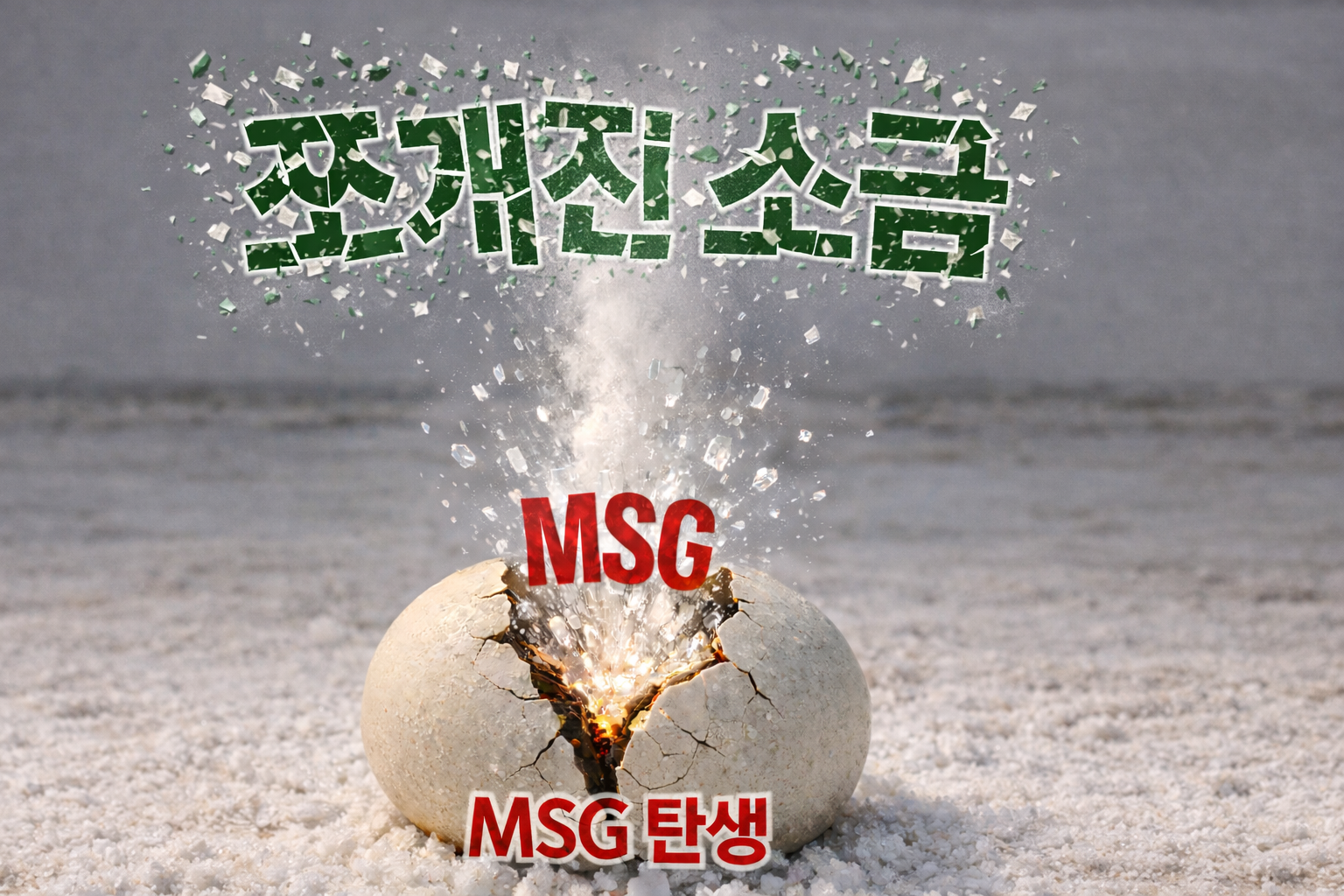
소금은 언제 ‘식품’에서 ‘화학 원료’로 바뀌었을까요?
유럽 산업혁명과 염화나트륨의 재정의
“소금의 쪼개짐 속에서 탄생한 MSG.”
이 문장을 이해하려면 먼저 소금의 지위가 언제, 어떻게 변했는지를 살펴봐야 합니다. 소금은 오랜 세월 식탁과 보존을 지탱해 온 물질이었지만, 19세기 산업혁명 이후 그 의미는 근본적으로 달라졌습니다. 소금은 더 이상 단순한 조미 광물이 아니라, 화학 산업의 출발 물질로 재정의되기 시작했습니다.
소금의 재해석: 광물에서 반응 물질로
산업혁명기 유럽에서 염화나트륨은 자연 상태의 미네랄 혼합물이 아니라, 화학 반응의 출발점으로 보기 시작했습니다. 소금은 채굴과 증발을 통해 얻는 자연물이었지만, 점차 대형 공장에서 정제되고 분리되며 규격화되는 물질로 이동했습니다. 이때부터 소금의 가치는 ‘맛’이 아니라 ‘순도’로 평가됩니다. 산업 공정은 불순물을 변수로 보았기 때문입니다.
염소-알칼리 공정의 확립
염화나트륨 수용액을 전기분해하면 염소와 수산화나트륨이 생성됩니다. 이 염소-알칼리 공정은 단순한 화학 반응이 아니라, 동일 품질의 원료를 반복적으로 공급하는 산업 시스템이었습니다. 염소는 표백과 살균, 합성수지와 각종 화학 중간체 산업으로 확장되었고, 수산화나트륨은 제지, 섬유, 비누, 세제, 의약품 합성 등 다양한 분야의 기본 물질이 되었습니다.
이 시점에서 소금은 더 이상 식탁 중심 물질이 아니었습니다. 염화나트륨은 나트륨과 염소를 공급하는 원천이 되었고, 산업은 고순도 원료를 요구하기 시작했습니다.
정제의 의미: 위생이 아닌 표준화
소금의 정제는 단순히 소비자의 위생 요구 때문만은 아니었습니다. 더 본질적으로는 공정 안정성과 공급망 표준화를 위한 필요에서 출발했습니다. 네덜란드, 독일, 영국에서는 대형 정제 설비가 등장했고, 진공 증발 기술이 도입되면서 고순도 정제염 생산 체계가 확립되었습니다. 미국에서도 19세기 후반 정제 소금 산업이 성장하며 산업용과 식품용을 동시에 아우르는 표준화 체계가 자리 잡았습니다.
소금의 두 갈래 길
이 과정에서 소금은 두 방향으로 이동합니다. 하나는 식탁으로, 다른 하나는 화학 공장으로 향합니다. 그러나 산업 규모가 커질수록 중심은 공정 쪽으로 이동합니다. 염화나트륨은 조미 광물이 아니라 염소와 가성소다 생산의 출발점이 되었고, 이 나트륨과 염소는 다시 수많은 산업으로 확장되었습니다.
여기서 질문이 남습니다. 만약 소금에서 나트륨을 안정적으로 분리하고 대량 공급할 수 있는 기술이 없었다면, 근대 화학 산업은 같은 속도로 성장할 수 있었을까요. 동일 규격의 가성소다와 염소를 반복 생산할 수 없었다면, 군수 산업과 제약 산업의 표준화는 가능했을까요. 소금의 쪼개짐은 단순한 분해가 아니라 산업 인프라의 형성이었습니다.
다음 글 예고
글루탐산은 이미 독일에서 발견되었습니다. 그러나 그 발견은 곧바로 조미료의 탄생으로 이어지지 않았습니다. 분자의 발견과 산업적 완성 사이에는 또 다른 조건이 필요했기 때문입니다. 다음 글에서는 독일에서 분리된 글루탐산이 왜 조미료로 완성되지 못했는지를 이어서 살펴보겠습니다.
Divided Salt
When Did Salt Change from “Food” to “Chemical Raw Material”?
The Redefinition of Sodium Chloride in the European Industrial Revolution
“MSG was born within the division of salt.”
To understand this sentence, we must first examine when and how the status of salt changed. For centuries, salt sustained the human table and preservation systems. However, after the 19th-century Industrial Revolution, its meaning fundamentally shifted. Salt was no longer merely a seasoning mineral; it began to be redefined as a starting material of the chemical industry.
Reinterpreting Salt: From Mineral to Reactive Substance
During the European Industrial Revolution, sodium chloride began to be treated not as a natural mineral mixture but as a starting point for chemical reactions. Salt had long been obtained through mining and evaporation, yet it gradually moved into large-scale factories where it was refined, separated, and standardized.
From this moment, the value of salt was no longer measured by “taste,” but by “purity.” Industrial processes regarded impurities as variables. Stability required uniformity.
The Establishment of the Chlor-Alkali Process
When an aqueous solution of sodium chloride undergoes electrolysis, chlorine and sodium hydroxide are produced. The chlor-alkali process was not merely a chemical reaction; it was an industrial system capable of repeatedly supplying raw materials of identical quality.
Chlorine expanded into bleaching, sterilization, synthetic resins, and numerous chemical intermediates. Sodium hydroxide became a foundational substance in paper production, textiles, soap, detergents, and pharmaceutical synthesis.
At this point, salt was no longer centered on the dining table. Sodium chloride became a source of sodium and chlorine, and industry began demanding high-purity inputs.
The Meaning of Refinement: Not Hygiene, but Standardization
The refinement of salt was not primarily driven by consumer hygiene demands. More fundamentally, it arose from the need for process stability and supply-chain standardization.
In the Netherlands, Germany, and the United Kingdom, large refining facilities emerged. With the introduction of vacuum evaporation technology, systems for producing high-purity refined salt were established. In the United States, refined salt industries expanded in the late 19th century, forming standardized systems that simultaneously served industrial and food uses.
The Two Paths of Salt
During this transformation, salt began to move in two directions. One path led to the table. The other led to the chemical factory.
As industrial scale increased, however, the center of gravity shifted toward process use. Sodium chloride was no longer merely a seasoning mineral but the starting point for chlorine and caustic soda production. These, in turn, expanded into countless industries.
A structural question remains.
If technology to reliably separate sodium from salt and supply it in large quantities had not existed, could modern chemical industry have grown at the same pace? Without the ability to repeatedly produce standardized caustic soda and chlorine, would the standardization of military and pharmaceutical industries have been possible?
The “division of salt” was not simple decomposition. It was the formation of industrial infrastructure.
Preview of the Next Article
Glutamic acid had already been discovered in Germany. Yet that discovery did not immediately lead to the birth of seasoning.
Between molecular discovery and industrial completion, another condition was required.
In the next article, we will examine why glutamic acid, once isolated in Germany, did not immediately become a finished seasoning product.
日本語版
分解された塩
塩はいつ「食品」から「化学原料」へと変わったのか
ヨーロッパ産業革命と塩化ナトリウムの再定義
「塩の分解の中からMSGが誕生した。」
この一文を理解するためには、まず塩の位置づけがいつ、どのように変化したのかを見なければなりません。塩は長い間、人類の食卓と保存技術を支えてきました。しかし19世紀の産業革命以降、その意味は根本的に変わります。塩は単なる調味用の鉱物ではなく、化学産業の出発物質として再定義され始めたのです。
塩の再解釈:鉱物から反応物質へ
産業革命期のヨーロッパでは、塩化ナトリウムは自然の鉱物混合物ではなく、化学反応の出発点として扱われるようになりました。塩は採掘や蒸発によって得られていましたが、次第に大規模工場で精製・分離・規格化される物質へと移行します。
この時点から、塩の価値は「味」ではなく「純度」で評価されるようになりました。工業プロセスにとって、不純物は変動要因だったからです。
塩素・アルカリ工業の確立
塩化ナトリウム水溶液を電気分解すると、塩素と水酸化ナトリウムが生成されます。塩素・アルカリ工業は単なる化学反応ではなく、同一品質の原料を繰り返し供給できる産業システムでした。
塩素は漂白、殺菌、合成樹脂、各種化学中間体へと拡張し、水酸化ナトリウムは製紙、繊維、石鹸、洗剤、医薬品合成などの基礎物質となりました。
この時点で、塩はもはや食卓中心の物質ではありませんでした。塩化ナトリウムはナトリウムと塩素を供給する源となり、産業は高純度原料を求め始めました。
精製の意味:衛生ではなく標準化
塩の精製は単に消費者の衛生要求から生まれたものではありません。より本質的には、工程の安定性と供給網の標準化の必要から出発しました。
オランダ、ドイツ、イギリスでは大規模精製設備が登場し、真空蒸発技術の導入により高純度精製塩の生産体制が確立されました。アメリカでも19世紀後半に精製塩産業が成長し、工業用と食品用を同時に支える標準化体制が整いました。
塩の二つの道
この過程で、塩は二つの方向へ進みました。一つは食卓へ、もう一つは化学工場へ。
しかし産業規模が拡大するにつれ、重心は工程側へ移ります。塩化ナトリウムは調味鉱物ではなく、塩素と苛性ソーダ生産の出発点となりました。そしてそれらは無数の産業へと広がっていきました。
ここで問いが残ります。
もし塩からナトリウムを安定的に分離し大量供給する技術が存在しなかったなら、近代化学産業は同じ速度で成長できたでしょうか。規格化された苛性ソーダと塩素を繰り返し生産できなかったなら、軍需産業や製薬産業の標準化は可能だったでしょうか。
塩の「分解」とは単なる分離ではありません。それは産業インフラの形成でした。
次回予告
グルタミン酸はすでにドイツで発見されていました。しかしその発見は、すぐに調味料の誕生にはつながりませんでした。
分子の発見と産業的完成の間には、もう一つの条件が必要だったのです。
次回は、ドイツで分離されたグルタミン酸が、なぜ直ちに調味料として完成しなかったのかを考察します。
소금의 쪼개짐 이후: MSG와 현대 식탁의 구조적 전환
Slug
salt-division-modern-table
Meta Description
소금의 산업적 분리와 글루탐산 나트륨의 결합은 현대 식품 설계를 어떻게 바꾸었는가. 자연 매트릭스에서 기능 기반 설계로의 전환을 분석한다.
태그
소금의쪼개짐,MSG구조,글루탐산나트륨,우마미산업,식품설계전환,나트륨플랫폼,가공식품역사,맛의표준화,자연매트릭스,기능분리,식탁재구성,산업식품,감각기준점,조미료역사,현대식생활
Leave a Reply