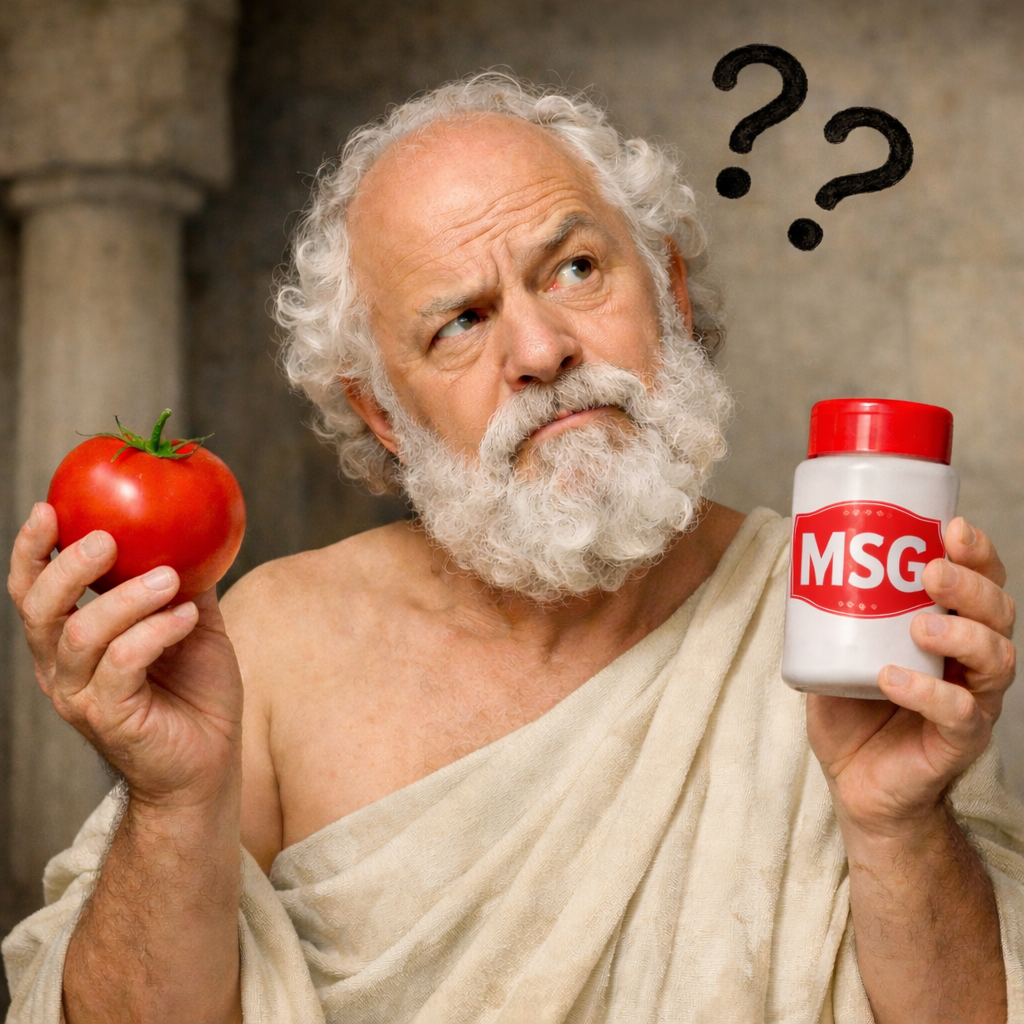
미원이나 다시다의 글루탐산과 다시마나 토마토의 글루탐산은 같다.
뇌가 이 맛을 갈구하도록 설계되어 있다.
그러니 미원이든 다시다이든 쳐서 맛있게 드십시오.
이런 삼단논법은 사실을 과학적으로, 전체 구조로 설명한, 전문가로서 적절한 표현일까요?
분자 자체가 동일하다는 사실과 그 분자가 어떤 식품매트릭스와 어떤 농도 그리고 어떤 반복 노출 구조 속에서 섭취되는지는 완전히 다른 문제입니다.
인간의 뇌가 특정 산업 제품을 갈구하도록 설계되어 있다고 말하기보다는 반복적이고 재현성 높은 풍미 환경이 학습을 통해 선호를 형성할 수 있다고 설명하는 것이 더 정확합니다.
또한 고기에 조미료를 넣으면 몇 배 맛있어진다라는 진행자의 말은 개인의 미각 판단을 넘어 식품 산업이 오랜 시간 동안 동일한 풍미 강도를 재현할 수 있도록 설계해 온 미각 플랫폼인 플레이버 플랫폼(flavor platform)의 결과로 이해하는 것이 더 현실에 가깝습니다. 이는 자연 식재료의 감칠맛과 공장 표준화된 조미 시스템을 구분해야 하는 이유이기도 합니다.
전 오늘 이야기를 조미료라는 용어 자체를 제대로 이해하는 것에서부터 시작하려고 합니다.
조미료라는 용어는 국가와 문화에 따라 다르게 사용되어 왔다는 점을 인지해야 합니다.
영어권에서는 전통적으로 솔트(salt)와 허브(herbs) 그리고 스파이시스(spices) 및 시즈닝(seasonings)과 향미증진제인 플레이버 인핸서(flavor enhancers)를 구분해 사용해 왔지만 일본과 한국에서는 산업화 과정에서 특정 화학적 향미증진제가 넓은 의미의 조미료 범주 안에 함께 포함되는 용어적 변화가 있었습니다. 이 차이는 단순한 번역 문제가 아니라 식품 산업 구조와 소비 환경의 차이를 반영합니다.
그리고 그 산업 구조의 바탕에는 소금을 비롯한 원료를 단일 성분 단위로 분리하고 표준화하는 공정이 자리 잡고 있습니다. 이러한 분리와 표준화는 소비자의 요구에서 출발했다기보다 화학 산업이나 공업 원료 확보 그리고 식품 공정의 대량 표준화 같은 산업적 필요에서 먼저 발전했습니다. 이후 그 위에 향미증진제와 조미 플랫폼이 구축되면서 오늘날 우리가 접하는 다양한 가공식품의 맛 구조가 형성되었습니다.
따라서 지금 우리가 다루고 있는 문제는 특정 제품 하나의 안전성 여부만이 아니라 반복 노출과 표준화된 풍미 플랫폼이 사회 전체의 미각 기준과 식습관을 어떻게 변화시키고 있는지를 함께 바라보아야 하는 문제라고 말씀드릴 수 있습니다.
영어권과 일본 그리고 한국에서 조미료 개념이 어떻게 달라졌는지 말씀드립니다
역사 흐름을 기준으로 조미료의 개념 변화를 정리해 보겠습니다.
원래 시즈닝(seasoning)이라고 부르는 조미료의 역사적 의미를 살펴봅니다
역사적으로 대부분 문화권에서 시즈닝(seasoning)이나 컨디먼트(condiment) 혹은 조미료라는 개념은 다음을 의미했습니다.
소금과 설탕 그리고 식초가 있었습니다. 또한 페퍼(pepper)나 허브(herbs) 그리고 스파이시스(spices) 같은 향신료를 의미했습니다. 더불어 간장이나 된장 같은 발효장류와 육수나 건조 해산물 등 자연 재료를 뜻했습니다.
즉 자연물 또는 자연 추출물이 기본 개념이었습니다. 19세기 말까지 조미료라는 말에는 화학적으로 정제된 단일 분자 첨가물이 포함되지 않았습니다.
일본에서 조미료(調味料)라는 용어의 개념 확장이 시작되었습니다
천구백팔년 일본에서 이케다 기쿠나에가 다시마에서 글루탐산을 추출하고 이후 아지노모토가 엠에스지(MSG)를 산업화하면서 중요한 변화가 일어났습니다. 이후 일본 식품 행정은 엠에스지(MSG)를 다음과 같이 분류했습니다.
조미료(調味料) 그리고 화학조미료(化学調味料)로 분류하였습니다.
즉 일본에서는 단일 분자 엠에스지(MSG)도 조미료 범주에 포함되었습니다. 이것이 세계적으로 매우 특이한 정책 결정이었습니다. 이 시점부터 일본에서는 소금과 간장 그리고 된장과 엠에스지(MSG)가 모두 조미료라는 동일 카테고리에 들어가게 됩니다. 이 체계가 이후 한국으로 그대로 들어옵니다.
영어권에서 시즈닝(seasoning)과 향미증진제(flavor enhancer)를 분리한 것에 대해 말씀드립니다
영어권 식품 규제 체계에서는 일본과 달리 개념을 분리했습니다. 대표적인 구분은 다음과 같습니다.
시즈닝(Seasoning) 혹은 컨디먼트(Condiment)에는 솔트(salt)와 스파이시스(spices) 그리고 허브(herbs)와 소스(sauces) 및 내추럴 익스트랙트(natural extracts)가 포함됩니다.
푸드 애디티브(Food additive) 중 플레이버 인핸서(Flavor enhancer)에는 모노소듐 글루타메이트(monosodium glutamate)인 엠에스지(MSG)와 다이소듐 이노시네이트(disodium inosinate) 그리고 다이소듐 구아닐레이트(disodium guanylate)가 포함됩니다.
즉 영어권 규제에서는 엠에스지(MSG)를 일반적으로 시즈닝(seasoning)이 아니라 플레이버 인핸서(flavor enhancer)인 향미증진제로 분류하는 것이 원칙입니다. 그래서 성분표에서도 보통 플레이버 인핸서(Flavor enhancer)나 플레이버링 에이전트(Flavoring agent) 혹은 푸드 애디티브(Food additive) 같은 범주에 들어갑니다.
즉 , 영어권은 엠에스지(MSG)를 조미료라고 부르지 않습니다. 다만 일상 대화에서 시즈닝(seasoning)으로 느슨하게 부르는 경우도 있어 완전히 분리된 것은 아닙니다.
한국이 일본 체계를 직접적으로 계승했다는 점을 말씀드립니다
한국 식품 제도는 식민지 시기 일본 식품 행정의 영향을 강하게 받았습니다. 그 결과 다음과 같은 현상이 발생합니다.
엠에스지(MSG)가 조미료로 분류됩니다. 또한 핵산조미료가 복합조미료로 분류됩니다. 그리고 다시다나 코인육수 그리고 연두 등이 조미료로 불리게 됩니다.
즉 단일 분자 첨가물과 자연 조미 재료가 동일 용어로 묶였습니다. 이것은 영어권 규제 구조와 비교하면 상당히 독특한 구조입니다.
다음 글 예고: 다음 글에서는 조미료의 중요한 역사적 포인트와 식품사적 핵심 흐름에 대해 정리해보는 시간을 갖도록 하겠습니다.
Taste
“The glutamic acid in Miwon or Dasida is identical to the glutamic acid in kelp or tomatoes. The brain is designed to crave this taste. Therefore, feel free to add Miwon or Dasida and enjoy your meal.”
Is this syllogism an appropriate expression for an expert explaining facts scientifically and comprehensively?
The fact that the molecule itself
is identical is an entirely different issue from the food matrix, concentration, and the structure of repeated exposure in which that molecule is consumed.
Rather than stating that the human brain is designed to crave specific industrial products, it is more accurate to explain that a highly reproducible flavor environment can form preferences through learning.
Furthermore, a host’s remark that “adding flavor enhancers to meat makes it several times more delicious” should be understood beyond individual taste judgments; it is more realistic to view this as the result of a “flavor platform” — a taste system designed by the food industry over a long period to reproduce identical flavor intensities. This is also why we must distinguish between the umami of natural ingredients and factory-standardized seasoning systems.
Today, I would like to begin the video by properly understanding the term “seasoning” itself.
We must recognize that the term for seasoning has been used differently depending on the country and culture.
In the English-speaking world, there has traditionally been a distinction between salt, herbs, spices, and seasonings versus flavor enhancers. However, in Japan and Korea, during the industrialization process, a terminological shift occurred where specific chemical flavor enhancers were included within the broader category of seasonings. This difference is not merely a translation issue but reflects differences in the structure of the food industry and the consumption environment.
Underlying this industrial structure is the process of isolating and standardizing raw materials, including salt, into single-component units. This isolation and standardization originated not from consumer demand, but rather from industrial necessities such as the chemical industry, the securing of industrial raw materials, and the mass standardization of food processing. Subsequently, as flavor enhancers and seasoning platforms were built upon this foundation, the flavor structures of the various processed foods we encounter today were formed.
Therefore, the issue we are dealing with now is not solely about the safety of a single specific product, but rather a problem that requires us to examine how repeated exposure and standardized flavor platforms are altering the taste standards and dietary habits of society as a whole.
Here is how the concept of seasoning differs among the English-speaking world, Japan, and Korea.
I will summarize the conceptual changes of seasoning based on historical flow.
Examining the historical meaning of what is originally called “seasoning”
Historically, in most cultures, the concept of seasoning, condiment, or flavoring meant the following:
- It included salt, sugar, and vinegar.
- It also meant spices such as pepper, herbs, and other spices.
- Additionally, it referred to natural ingredients like fermented pastes (soy sauce, soybean paste), broths, and dried seafood.
In other words, the fundamental concept was based on natural substances or natural extracts. Until the late 19th century, the term seasoning did not include chemically refined single-molecule additives.
The expansion of the concept of seasoning began in Japan
A significant change occurred in 1908 when Kikunae Ikeda extracted glutamic acid from kelp in Japan, and subsequently, Ajinomoto industrialized MSG. Thereafter, Japanese food administration classified MSG as follows:
- They classified them into seasonings (調味料) and chemical seasonings (化学調味料).
That is, in Japan, the single-molecule MSG was included in the seasoning category. This was a highly unusual policy decision globally. From this point on, in Japan, salt, soy sauce, soybean paste, and MSG all fell into the same category of seasoning. This system was later introduced directly into Korea.
Regarding the separation of seasoning and flavor enhancer in the English-speaking world
Unlike Japan, the regulatory system in the English-speaking world separated the concepts. The typical classification is as follows:
- Seasoning or Condiment includes salt, spices, herbs, sauces, and natural extracts.
- Among Food Additives, Flavor Enhancers include monosodium glutamate (MSG), disodium inosinate, and disodium guanylate.
In other words, under English-speaking regulations, MSG is generally classified as a flavor enhancer, not a seasoning. Therefore, on ingredient lists, it typically falls under categories such as Flavor Enhancer, Flavoring Agent, or Food Additive.
Thus, the perception that the English-speaking world does not call MSG a seasoning is largely true to the facts. However, in casual conversation, it is sometimes loosely referred to as a seasoning, so they are not entirely separated.
Noting that Korea directly inherited the Japanese system
The Korean food regulatory system was strongly influenced by Japanese food administration during the colonial period. As a result, the following phenomena occur:
- MSG is classified as a seasoning.
- Nucleic acid flavor enhancers are classified as complex seasonings.
- Products like Dasida or coin broths are called seasonings.
In other words, single-molecule additives and natural seasoning ingredients were grouped under the same term. This is a quite unique structure when compared to the regulatory structure of the English-speaking world.
Next Article Preview: In the next article, we will take time to summarize the important historical points of seasonings and the core trends in food history.
味(Taste)
「ミウォンやダシダのグルタミン酸と、昆布やトマトのグルタミン酸は同じである。脳はこの味を渇望するように設計されている。だから、ミウォンであれダシダであれ、ふりかけて美味しく食べてください。」
このような三段論法は、事実を科学的に、かつ全体的な構造として説明する専門家として、適切な表現でしょうか。
分子自体が同一であるという事実と、その分子がどのような食品マトリックス、どのような濃度、そしてどのような反復露出の構造の中で摂取されるかということは、まったく別の問題です。
人間の脳が特定の工業製品を渇望するように設計されていると言うよりは、反復的で再現性の高い風味環境が、学習を通じて嗜好を形成する可能性があると説明する方がより正確です。
また、「肉に調味料を入れると何倍も美味しくなる」という進行者の言葉は、個人の味覚的判断を超えて、食品産業が長い時間をかけて同一の風味強度を再現できるように設計してきた味覚プラットフォーム、すなわち「フレーバー・プラットフォーム(flavor platform)」の結果として理解する方が現実に近いです。これは、自然の食材の旨味と、工場で標準化された調味料システムを区別しなければならない理由でもあります。
今日、私はまず「調味料」という用語自体を正しく理解することから映像を始めようと思います。
調味料という用語は、国や文化によって異なる使われ方をしてきたことを認識しなければなりません。
英語圏では伝統的に、塩(salt)、ハーブ(herbs)、スパイス(spices)、シーズニング(seasonings)と、香味増進剤であるフレーバー・エンハンサー(flavor enhancers)を区別して使用してきました。しかし、日本と韓国では工業化の過程で、特定の化学的香味増進剤が広い意味での調味料の範疇に一緒に含まれるという用語的な変化がありました。この違いは単純な翻訳の問題ではなく、食品産業の構造と消費環境の違いを反映しています。
そして、その産業構造の根底には、塩をはじめとする原料を単一成分単位に分離し、標準化する工程が存在します。このような分離と標準化は、消費者の要求から出発したというよりは、化学産業や工業原料の確保、そして食品工程の大量標準化といった産業上の必要性から先に発展しました。その後、その上に香味増進剤や調味プラットフォームが構築されることで、今日私たちが接する多様な加工食品の味の構造が形成されたのです。
したがって、今私たちが扱っている問題は、特定の製品一つの安全性の有無だけでなく、反復露出と標準化された風味プラットフォームが、社会全体の味覚基準と食習慣をどのように変化させているのかを共に見つめなければならない問題だと言えます。
英語圏、日本、そして韓国で調味料の概念がどのように異なってきたのかをご説明します。
歴史の流れを基準に、調味料の概念の変化を整理してみます。
本来「シーズニング(seasoning)」と呼ばれる調味料の歴史的意味について
歴史的に、ほとんどの文化圏において、シーズニング(seasoning)、コンディメント(condiment)、あるいは調味料という概念は次のようなものを意味していました。
- 塩、砂糖、そして酢がありました。
- また、ペッパー(pepper)やハーブ(herbs)、スパイス(spices)などの香辛料を意味しました。
- さらに、醤油や味噌のような発酵調味料、出汁や乾燥海産物などの自然素材を指していました。
つまり、自然物または自然抽出物が基本概念でした。19世紀末まで、調味料という言葉には化学的に精製された単一分子添加物は含まれていませんでした。
日本における「調味料」という用語の概念拡張の始まり
1908年、日本で池田菊苗が昆布からグルタミン酸を抽出し、その後、味の素がMSGを工業化したことで重要な変化が起きました。その後、日本の食品行政はMSGを次のように分類しました。
- 調味料、そして化学調味料として分類しました。
すなわち日本では、単一分子であるMSGも調味料の範疇に含まれたのです。これは世界的に見ても非常に特異な政策決定でした。この時点から日本では、塩、醤油、味噌、そしてMSGがすべて「調味料」という同一のカテゴリーに入ることになります。この体系が後に韓国へとそのまま導入されます。
英語圏におけるシーズニングとフレーバー・エンハンサーの分離について
英語圏の食品規制体系では、日本とは異なり概念を分離しました。代表的な区分は以下の通りです。
- シーズニング(Seasoning)またはコンディメント(Condiment)には、塩(salt)、スパイス(spices)、ハーブ(herbs)、ソース(sauces)、および天然抽出物(natural extracts)が含まれます。
- 食品添加物(Food additive)のうち、フレーバー・エンハンサー(Flavor enhancer:香味増進剤)には、グルタミン酸ナトリウム(monosodium glutamate:MSG)、イノシン酸二ナトリウム(disodium inosinate)、グアニル酸二ナトリウム(disodium guanylate)が含まれます。
つまり英語圏の規制では、MSGを一般的にシーズニングではなく、フレーバー・エンハンサーとして分類するのが原則です。そのため成分表でも、通常はフレーバー・エンハンサー、フレーバリング・エージェント(Flavoring agent)、またはフード・アディティブ(Food additive)などの範疇に入ります。
利用者が認識しているように、英語圏ではMSGを調味料と呼ばないという部分は、かなりの部分で事実に基づいています。ただし、日常会話では緩やかにシーズニングと呼ばれることもあり、完全に分離されているわけではありません。
韓国が日本の体系を直接的に継承した点について
韓国の食品制度は、植民地時代の日本の食品行政の強い影響を受けました。その結果、次のような現象が生じます。
- MSGが調味料として分類されます。
- 核酸調味料が複合調味料として分類されます。
- そして、ダシダやコイン肉水(タブレット状の出汁)が調味料と呼ばれるようになります。
つまり、単一分子添加物と自然の調味材料が同じ用語で括られたのです。これは英語圏の規制構造と比較すると、非常に独特な構造です。
次回の予告:次回の記事では、調味料の重要な歴史的ポイントと、食品史における中核的な流れについて整理する時間を持ちたいと思います。
\
Leave a Reply